This fact sheet summarizes the information contained in the publication Burgos Cuevas et al. (2025): Moving from interconnected crises to systemic solutions. Resource efficiency, nature-based solutions, and systemic transformation as responses to the complexity of the triple planetary crisis. Interim report, Climate Change 83/2025. German Environment Agency: Dessau-Roßlau. https://doi.org/10.60810/openumwelt-8108.
The triple planetary crisis is a systemic challenge, not three separate issues: climate change, biodiversity loss, and pollution reinforce one another through shared drivers and feedback, threatening planetary and human well-being. It is driven by fossil fuel dependence, unsustainable production and consumption, overexploitation of land and resources, and structural inequalities. The analysis concludes that the triple crisis can only be effectively addressed through systemic, cross-sectoral, and justice-oriented approaches. By linking resource governance, NbS, and transformative change, this report highlights how today’s triple crisis can be turned into an opportunity to regenerate ecosystems, reduce inequalities, and build resilient societies within planetary boundaries.
This report, by Ecologic Institute and Öko-Institut, explores how emerging EU policy instruments – such as the proposed Agricultural Emissions Trading System (AgETS), Mandatory Climate Standards (MCS), and public procurement programmes – can integrate carbon farming while maintaining high environmental standards. The study highlights both the opportunities and the pitfalls of linking these policies to the Carbon Removals and Carbon Farming Regulation (CRCF) and its system of temporary certified carbon units – and investigates alternative approaches to promote carbon farming.
Europe's agricultural sector holds tremendous potential to advance climate and environmental goals, but realizing that potential depends on the right mix of funding and targeted support. A new report led by Ecologic Institute, together with partners in the Climate Farm Demo (CFD) project, introduces a framework to better understand and navigate the wide variety of rewarding mechanisms that encourage farmers to adopt climate-smart practices.
On 25 September 2025, the Sowing Solutions: Science & Policy for a Sustainable and Thriving EU Agriculture event, organized by the Environmental Defense Fund Europe, explored these challenges. A dedicated session on "livestock methane in CAP Strategic Plans" brought together scientists, policymakers, and stakeholders to share evidence and discuss how the CAP can drive real impact. The goal was to spark fresh thinking, informed debate, and practical pathways forward.
With the 2027 deadline of the Water Framework Directive approaching and the new Nature Restoration Regulation mandating large-scale ecosystem recovery, the CAP’s role in safeguarding rivers, wetlands, and catchments has become critical. This Policy Working Paper argues that long-term agricultural resilience is inseparable from healthy freshwater ecosystems and illustrates how water restoration can be embedded in future agricultural policies to enhance water resilience.
This report published under the EU-funded GoNaturePositive! project offers a comprehensive baseline assessment to support the transition toward a nature-positive economy. The report provides an in-depth analysis of EU policy instruments and co-operative initiatives, identifying their alignment with nature positive principles and opportunities to reduce environmental harm, restore ecosystems, and foster systemic change.
The background paper sheds light on how authorities can enable and accelerate peatland rewetting projects with legal certainty under current law. It shows that, despite numerous legal hurdles, there is considerable scope for decision-making, particularly in the context of planning and nature conservation law.
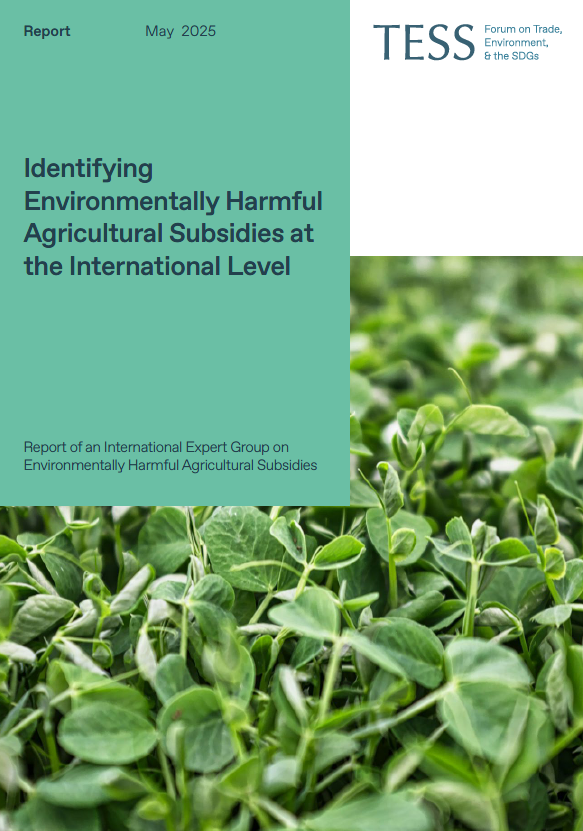
How can international policy better align agricultural subsidies with environmental and sustainability goals? This report addresses that question by synthesising the current state of knowledge and offering concrete approaches for identifying and reforming environmentally harmful agricultural subsidies.
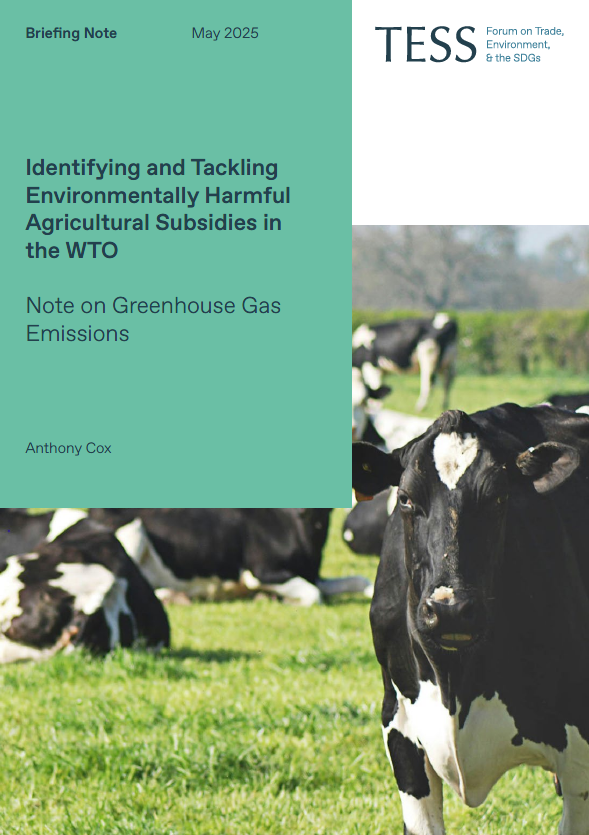
Prepared by Anthony Cox (Senior Policy Advisor at Ecologic Institute), this briefing note offers an up-to-date overview of how the agricultural sector contributes to greenhouse gas (GHG) emissions. It identifies key social, economic, and environmental trade-offs and highlights the importance of context when assessing emission impacts. The note also provides guidance on prioritising reforms of agricultural subsidies.
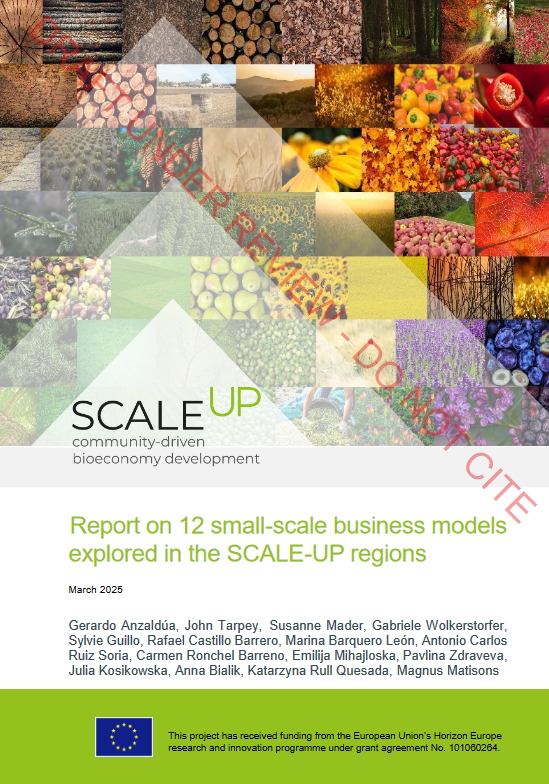
The Report on Regional Biomass Availabilities, Nutrient Balances and Ecological Boundaries was produced under the EU‐funded SCALE-UP project, which seeks to accelerate community‐driven bioeconomy development across six European regions: Northern Sweden, Mazovia (Poland), the French Atlantic Arc, Upper Austria, Andalusia (Spain), and Strumica (North Macedonia).
The bioeconomy concept presents an attractive framework for policymakers in Europe, as it holds the potential to foster innovations that match specific community needs with regionally available resources. The SCALE-UP project aims to enhance the capacity and expertise of multi-actor partnerships to accelerate the development of market-ready bio-based products and services while facilitating their successful market deployment. Additionally, SCALE-UP strengthens collaboration among primary producers, SMEs, industry clusters, social actors, and policymakers, promoting a cohesive approach to innovation.
This report explores options for scaling up carbon dioxide removals in the EU, considering respective costs, risks and opportunities. This assessment, covering both carbon sinks in the land sector and novel solutions, involves analyses of the status and potential of carbon dioxide removals in the EU, key policy needs and gaps, as well as policy recommendations for a robust EU governance of carbon dioxide removals.
This Deliverable presents the work of the CREDIBLE Focus Group 2.1, "Minimum requirements to ensure carbon farming delivers sustainability benefits". The objective of the Focus Group and the goal of this document is to make recommendations on how the CRCF can maximize the positive impact of carbon farming on biodiversity, adaptation, water and other sustainability outcomes, at the same time as mitigating climate change.
The symposium "The future task of a near-natural landscape water balance" of the Federal Agency for Nature Conservation (BfN) was organized by Ecologic Institute and took place on 18 April 2024, in Bonn. This publication summarises the most important contents of the conference as well as the research and implementation needs identified.
This report, commissioned by the German Environment Agency and co-authored by Ecologic Institute, contains a detailed assessment of ten crediting methodologies on climate-friendly soil management measures. These crediting methodologies are examples of result-based payment and offsetting approaches to fund enhanced carbon sequestration and reduce greenhouse gas (GHG) emissions from agricultural practices. Our evaluation of these certification methodologies covers key aspects, including emission quantification, baseline setting, additionality, risk management, environmental and social impacts, and governance. We find many weaknesses with the assessed methodologies.
Soils are vital for climate mitigation, storing substantial carbon. This report, co-authored by Ecologic Institute's Hugh McDonald, Aaron Scheid and Dr. Ana Frelih-Larsen, examines funding approaches to promote climate-friendly soil management in Europe, focusing on two models: action-based and result-based. Action-based funding supports specific activities but doesn't ensure measurable outcomes, while result-based funding ties payments to verified results, encouraging innovation but involving higher costs and monitoring. Result-based funding approaches can be challenging in the context of soil carbon, with offsetting approaches found to be particularly risky.